In-situ reaction analysis for precise non-invasive measurements
Online analysis in real time
In-situ real-time analyses enable precise measurements of cells and microbes to be collected without interrupting the growth process in the cultures and with as little impact as possible. This is achieved through the use of probe-based PAT instruments, optical measurement methods, or exhaust gas analysis instruments, which provide direct insight into the reactions taking place in the reactor.
In-situ reaction analysis enables continuous monitoring of the process and real-time tracking of reactions down to the molecular level. In particular, sufficient oxygen supply is crucial for the success of aerobic microbial cultures and can be quantified non-invasively with our systems, as can its influence on the metabolism of the culture under consideration.
Thanks to the connection to our automation system, all process data can be automatically recorded from in-situ PAT instruments, FTIR and Raman spectrometers, pH probes, and O22-sensors. The continuous documentation can be easily forwarded to data management systems for precise evaluation and storage of all important information.
Advantages of in-situ real-time analysis:
efficient and non-invasive measurement
Determination of the current metabolic state of the culture (product-inhibited, O2-limited, substrate-limited, etc.)
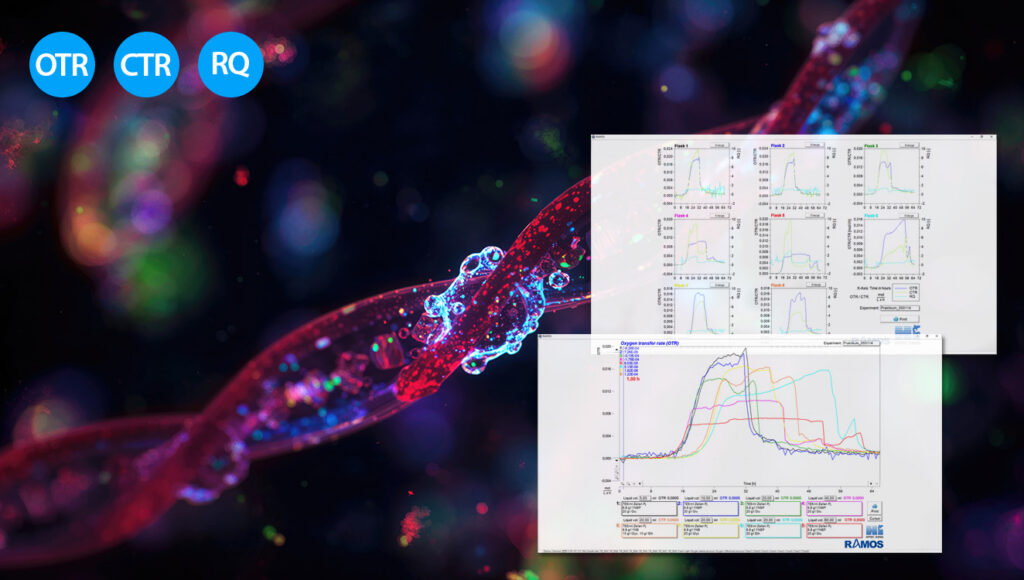
Precise online measurement of oxygen transfer rate (OTR), carbon dioxide transfer rate (CTR), or respiration quotient (RQ)
Provides important information about reaction kinetics, mechanisms, and signaling pathways
In-situ gas analysis: Messung direkt im Prozessgas, z.B. in shaken bioreactors, or as exhaust gas analysis (HiSense)
Media optimization and screening: Identification and quantification of available nutrients and limiting factors
Monitoring of synthesis reactions: Precise observation of the conversion of reactants to products in real time (e.g., using Raman or FTIR spectroscopy)
Thank you very much! We have received your data and will usually contact you personally within the next three working days – regardless of whether it concerns a specific project, a quote, or an initial consultation.