Battery Recycling
From the growing battery market to a true circular economy
Laboratory and pilot-scale facilities for wet chemical recycling
The growing prevalence of electric vehicles and portable electronic devices is driving a sharp increase in demand for lithium-ion batteries. To use existing raw materials efficiently, there is no long-term alternative to a true circular economy and battery recycling.
For industry, this means that waste materials such as black mass must be converted back into usable raw materials that can be reintroduced into the value chain.
Typical challenges
Battery recycling is not a standard process. The varying composition of the black mass, corrosive substances, and the pressure to maximize resource efficiency pose challenges for your facilities:
Â
- Resource Efficiency & Additive Management: Many hydrometallurgical processes require enormous quantities of acids and additives. Recovering them is often complex and costly.Â
- Process optimization for cost-effectiveness: Only through highly optimized processes that efficiently convert waste products into new, high-quality raw materials will it be possible to meet strict regulatory requirements (e.g., the EU Battery Regulation) and economic goals in the future.
- Process variability: Different cell chemistries (LFP, NMC, high-energy batteries) require extremely flexible and rapidly adaptable plant designs.
- Safety & Corrosion: Dealing with thermal risks, toxic gases, and highly corrosive media places the highest demands on material durability and measurement and control technology.
- Precision in scale-up: The transition from laboratory innovation to the industrial recovery of lithium, nickel, and cobalt must be achieved without compromising purity levels.Â
The Solution with HITEC ZANG
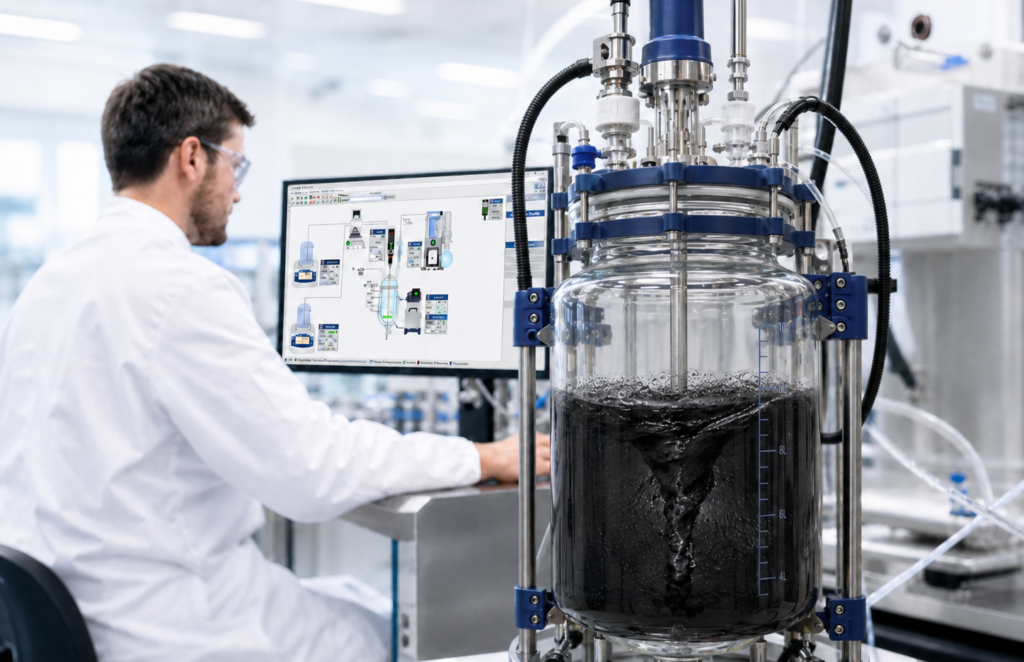
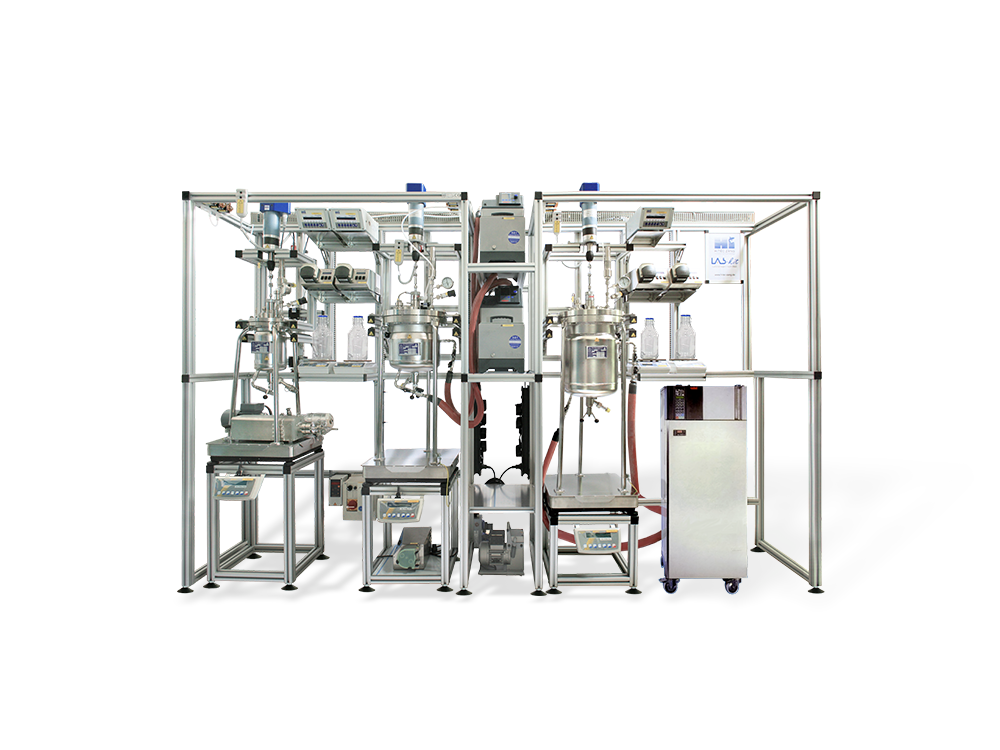
HITEC ZANG supports the development of battery recycling processes with automated laboratory and pilot-scale solutions. The goal is to accelerate process development by ensuring high data quality from the very first test, thereby making test series directly comparable and reliable. This enables the systematic investigation and efficient optimization of process variants for hydrometallurgy, leaching, precipitation, and lithium recovery.
Another advantage is scalability: processes can be quickly scaled up from the laboratory scale to the pilot plant. This facilitates the translation of initial findings into reproducible pilot processes and lays the groundwork for subsequent industrial application.
Â
Benefits for Research and Development
- Time savings: Shorter development cycles thanks to high data quality from the very first test and automated test series
- Resource efficiency: Minimized chemical consumption through automated reactor systems with precise dosing of acids and alkalis
- Maximum purity: High-precision pH control and automated phase separationÂ
- Process performance: Maximizing R&D efficiency through fully automated synthesis and precise real-time monitoring of particle size and temperature
- Scalability: Our systems scale with your needs—from laboratory scale to pilot plant
- Data integrity: Complete documentation of all process parameters for the certification of your recycled materials
Areas of application:
Our customers typically use the following products
Downloads
One-Step Solvometallurgical Process for Purification of Lithium Chloride to Battery Grade
Dženita Avdibegović et al. · Journal of Sustainable Metallurgy · 2022
Talk to us about automated process development for laboratories, pilot plants, and technical facilities.
Questions & Answers
Hydrometallurgy, leaching, solvo-leaching, precipitation, and lithium recovery are particularly relevant topics.
The volume of used batteries—especially from electric vehicles—will surge starting around 2030,when the first generations of mass-market EVs reach the end of their useful lives. Recycling facilities must be able to handle this growing volume without costs and quality spiraling out of control
Automation makes this possible—manual processes, on the other hand, quickly reach their limits.
Black mass is a key feedstock in battery recycling, from which valuable raw materials can be recovered through appropriate processing steps.
The composition and quality of black mass vary greatly depending on the battery manufacturer, cell chemistry, and age of the battery. This makes automated analysis and sorting all the more important.
Many recycling processes are complex, sensitive, and highly dependent on specific parameters. Automation is the key to making battery recycling safe, reproducible, and cost-effective—and thus to enabling the circular economy for electric mobility, for example.